
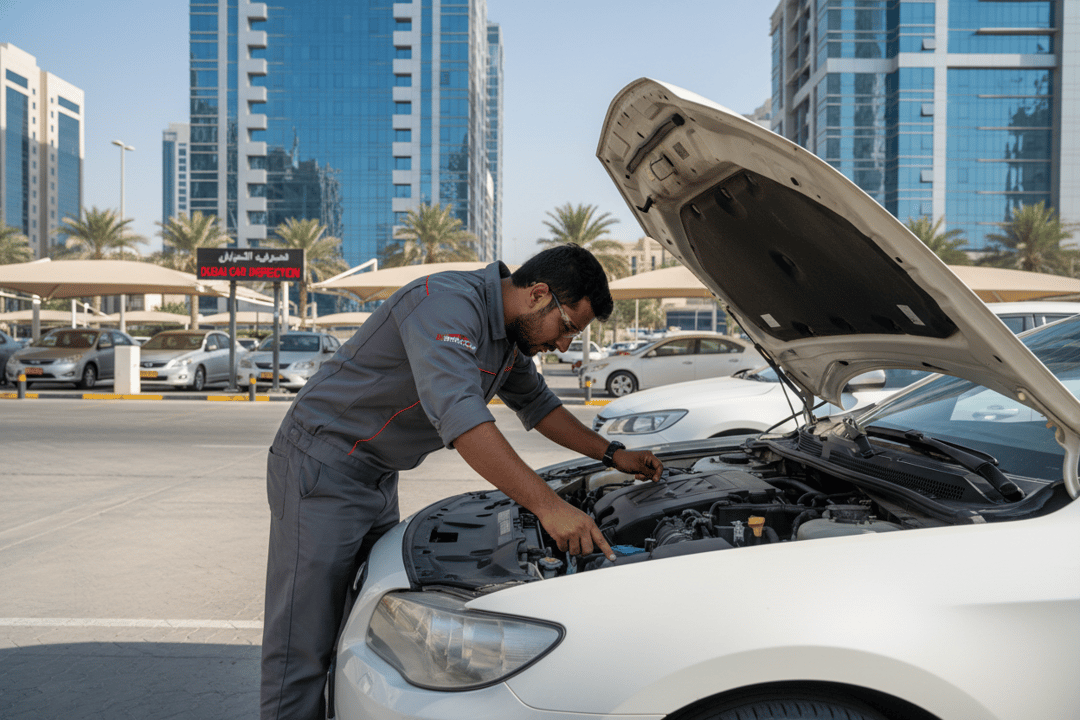
Fluids are the cheapest forensic evidence on a used car. The mechanic's manual says check oil colour, coolant level, transmission fluid smell. The seller will hand you a service book and say "see, all maintained at the dealer." But the fluids themselves do not lie, and they reveal in two minutes what the service book cannot hide: skipped intervals, contaminated systems, hidden internal damage, and the kind of corner-cutting that kills a car within a year of new ownership.
This is the thirteenth category in our 25-category, 410-plus-checkpoint inspection. Eleven focused fluid checks run with the engine warm, each one of them a clear pass-or-fail signal about how the car has actually been maintained, versus how the seller is describing the maintenance.
Why fluids tell the truth in the UAE used-car market
Two factors make fluid inspection particularly important in the UAE:
First, heat accelerates fluid degradation. Engine oil that is rated for higher mileage in Europe loses viscosity at higher mileage in UAE summer heat. Coolant that lasts 5 years in a temperate climate is exhausted in 3 to 4 UAE summers. Transmission fluid that is "lifetime" by manufacturer specification is contaminated at higher mileage on a UAE car that idles in city traffic with AC on full.
Second, sellers know fluids are visible. A spoonful of fresh oil added to the dipstick before a viewing can mask burnt oil underneath. A coolant top-up of the wrong colour mixed with the right colour can disguise a head-gasket leak for one week. Recognizing these short-term cosmetic fixes is what separates a casual look-over from a real fluid inspection.
The 11 fluid checkpoints
1. Engine Oil Level
Five states: Full, Low, Overfilled, Empty, Sealed Unit (No Dipstick). We pull the engine oil dipstick with the engine off and warm (run for 5 minutes, then waited 5 minutes). Oil level should sit between the "min" and "max" marks.
- Low: the engine is consuming oil. A 4-cylinder modern engine should burn no more than 0.5 litres per higher mileage. Anything more is a developing fault: worn piston rings, valve-stem seals, or a hidden external leak. Cross-reference with the engine and exhaust-smoke findings.
- Empty (oil light on): walk away. The engine has been driven below safe-pressure level and is damaged.
- Overfilled: excess oil foams at high RPM and damages bearings. Often a sign of a rushed oil change at a non-dealer workshop. Note for negotiation.
- Sealed unit (no dipstick): common on modern German cars. Oil level is read through the dashboard menu. We pull it from the OBD live data on the MS909.
2. Engine Oil Condition
Five states: Clean, Dark, Dirty, Milky, Sealed Unit (No Dipstick). We wipe oil from the dipstick onto a clean white tissue and inspect. Fresh oil is amber-to-light-brown. Used oil at the end of a service interval is dark brown to nearly black, normal.
- Milky (creamy beige colour): coolant is mixing with the oil. Either head-gasket failure or cracked block. 8,000 to 25,000 AED minimum repair. Walk away unless price reflects engine replacement.
- Metallic glitter visible on tissue: internal engine wear, bearing material entering the oil. Imminent engine failure.
- Black with strong burnt smell: oil overheated, common on cars driven hard in summer with no service. Diagnostic flush + new oil + investigation: 800 to 2,500 AED.
- Suspiciously fresh-amber on a high-mileage car: oil was changed yesterday to mask underlying problems. We pull a sample and look at the spent oil filter for evidence.
3. Coolant Level
Three states: Full, Low, Empty. We open the coolant overflow tank cap with the engine cold (never with a hot engine, risk of burns). Level should be between the min and max marks on the side of the translucent tank.
- Low: the system is leaking somewhere. Could be a small pinhole in a hose, a weeping water pump, or a cylinder-head crack. Pressure-test required.
- Empty: imminent overheating. The car has been topped up before viewing, the leak is significant.
- Full to the top of the cap: recently topped up to mask consumption. Look for stains on the engine block beneath hose connections.
4. Coolant Condition
Four states: Clean, Dirty, Contaminated, Oily. Coolant should match the manufacturer-specified colour: pink (most modern Asian cars), green (older Asian and American cars), blue (some Asian cars), purple (BMW), red (Toyota), orange (Volkswagen Group). The colour is consistent across the system.
- Brown coolant: degraded, beyond serviceable life. Full system flush: 800 to 2,500 AED.
- Coolant with rust particles: internal corrosion, often from a previous use of the wrong coolant or tap water. Radiator and heater core may be permanently damaged.
- Oily film on coolant surface: oil entering the cooling system. The reverse direction of milky oil, but the same root cause: head-gasket failure or cracked block.
- Mixed colours (e.g. pink + green): incompatible coolants mixed. The chemical reaction creates a brown sludge that blocks small passages. Major flush required.
5. Brake Fluid Level
Three states: Full, Low, Empty. We open the brake-fluid reservoir cap (clearly labelled, on top of the master cylinder near the firewall). Level should sit between the min and max marks.
A brake fluid level slowly dropping over time is normal, as brake pads wear, the calipers extend and the master cylinder reservoir level falls. But a level near minimum on a car claiming "new pads at the last service" is contradiction. Either the pads are not new, or there is a leak in the system. A leak in the brake system is a safety failure, not a maintenance item.
6. Brake Fluid Condition
Three states: Clear, Dark, Contaminated. Fresh brake fluid is light amber, almost clear. As the fluid ages, it absorbs water from the atmosphere (brake fluid is hygroscopic) and becomes progressively darker.
- Light amber, clear: recently flushed (within 1 to 2 years).
- Dark amber to brown: overdue service. Replacement: 250 to 700 AED.
- Black or contaminated: water content is above 3 percent. The fluid will boil under heavy braking, brake pedal goes to the floor exactly when you most need it. Critical safety repair.
UAE summer heat compounds this: brake fluid that boils at 230 degrees Celsius when fresh boils at 140 degrees Celsius when contaminated. After a long descent on Hatta or Jebel Jais with 50-degree ambient air, contaminated fluid is a brake-failure event waiting to happen.
7. Power Steering Fluid Level
Four states: Full, Low, Empty, N/A. We check the reservoir, usually clearly labelled "Power Steering Fluid" near the engine. The level should be between the markings.
Modern cars with electric power steering (EPS) do not have a hydraulic reservoir, this checkpoint is N/A. EPS faults instead show up in checkpoint 11 of the under-the-hood inspection or as ABS/EPS codes during the OBD scan.
A low hydraulic power-steering fluid level always means a leak somewhere: pump shaft seal, return hose, or rack-end seal. Cross-reference with under-the-hood findings.
8. Power Steering Fluid Condition
Four states: Clear, Dark, Contaminated, N/A. Fresh power-steering fluid is amber or pink (depending on specification). Used fluid darkens with age, but should never have visible debris or a burnt smell.
- Dark with a burnt smell: the pump has been running on low fluid and overheated. Internal damage likely.
- Visible debris or metal flakes: the rack or pump is breaking down. Major repair: 2,500 to 8,000 AED.
9. Transmission Fluid Level
Four states: Full, Low, Overfilled, Sealed Unit (No Dipstick). Older automatics use a transmission dipstick (similar to engine oil). Modern automatics, CVTs, and DCTs are mostly sealed, fluid level is set at service and not user-checkable.
- Sealed unit: we read the transmission temperature live through MS909 OBD and check transmission fluid level using the manufacturer-specific service procedure (often a fill plug under the car at a specific fluid temperature).
- Low on a car with a dipstick: there is a leak. Could be the pan gasket, the cooler lines, or a seal at the input shaft. Cross-reference with the drivetrain and underbody inspection.
- Overfilled: excess fluid foams at high RPM, just like overfilled engine oil. Common after a lazy service.
10. Transmission Fluid Condition
Eight states: Good, Acceptable, Dirty, Burnt Smell, Contaminated, Low Level, Needs Replacement, Sealed Unit (No Dipstick). We wipe transmission fluid on a tissue and look at colour and smell.
- Good (translucent red or pink): fresh, healthy.
- Dirty (dark red to brown): overdue change. Service: 600 to 2,500 AED depending on car.
- Burnt smell (acrid, like burnt toast): the transmission has overheated. Internal clutch damage is highly likely. Engine-out work eventually.
- Black with metallic glitter: internal hard parts breakdown. Major repair imminent. 6,000 to 25,000 AED.
- Pink fluid with milky cloudiness: coolant has entered the transmission via the radiator-mounted transmission cooler. This is the single most overlooked failure mode, radiator transmission coolers in older Lexus, Toyota, and Honda are a known weak point. Repair: 4,000 to 15,000 AED.
11. Windshield Washer Fluid
Three states: Full, Low, Empty. The smallest fluid on the car, but the most consistently neglected. We open the washer reservoir cap and check level.
This checkpoint is not about cost, washer fluid is 5 to 20 AED. It is about owner attitude. A car arriving at inspection with an empty washer reservoir, dirty windshield, and worn wiper blades is a strong signal of an owner who skipped the smallest courtesy maintenance, and that signal almost always extends to the bigger items below the bonnet.
Patterns the fluid inspection reveals
Three or more fluid findings together rarely happen by chance:
- Milky engine oil + coolant low + sweet exhaust smell at idle: head-gasket failure confirmed across three independent indicators. 8,000 to 25,000 AED minimum. Walk away unless price reflects it.
- Dark brake fluid + low brake-fluid level + worn pedal feel on test drive: brake system has both contamination and an active leak. Safety-critical. Negotiate full repair before delivery, not after.
- Burnt transmission fluid + slow shifts on test drive + transmission fault codes on OBD: internal transmission damage progressing. Major repair within 6 months.
- Overdue oil + overdue coolant + overdue brake fluid + empty washer: long-term maintenance neglect. Expect every neglected component (filters, plugs, belts, batteries) to be at the end of its life simultaneously. Total deferred bill: 5,000 to 12,000 AED.
- Suspiciously fresh oil + spotless engine bay + recent receipt from non-dealer workshop: car was prepared for sale in the last 48 hours. Look harder at every other system, the seller is hiding something.
How we actually test fluids in 8 minutes
Our inspectors carry:
- Clean white tissues for sampling oil and transmission fluid colour.
- A flashlight for inspecting reservoirs in dim engine bays.
- A digital brake-fluid moisture tester that gives a percentage water-content reading in 2 seconds.
- A coolant tester (refractometer) for confirming freezing point and pH.
- The MS909 OBD scanner for live oil-level reading on sealed-unit cars and for live transmission-fluid temperature when checking sealed-unit transmissions.
The full fluid inspection takes 8 to 12 minutes once the engine is warm.
What each fluid finding costs you
Rough negotiation guidance for the UAE used-car market:
- Engine oil change overdue: 200 to 800 AED.
- Engine oil consumption issue (not catastrophic): 600 to 3,500 AED diagnosis and repair.
- Milky engine oil (head gasket / cracked block): 8,000 to 25,000 AED. Often a walk-away.
- Coolant flush: 800 to 2,500 AED.
- Coolant leak repair: 400 to 4,500 AED depending on source.
- Brake fluid flush: 250 to 700 AED.
- Brake fluid contamination + caliper service: 1,200 to 4,500 AED.
- Power-steering fluid + pump leak repair: 1,500 to 4,500 AED.
- Transmission fluid service: 600 to 2,500 AED.
- Burnt transmission fluid + clutch damage: 6,000 to 25,000 AED.
- Coolant in transmission (cooler failure): 4,000 to 15,000 AED.
- Empty washer fluid: 5 a notable sum but the maintenance signal is worth flagging.
What the InspectCar fluid report shows you
Every one of the 11 fluid checkpoints is rated on the same five-tier scale used across the rest of the inspection: Excellent, Good, Minor, Major, or Other. We record level position (% of max), colour, smell, and the digital readings from the brake-fluid moisture tester and the coolant refractometer. Photographs document every finding, milky oil on the dipstick, coolant residue around a hose, a contaminated brake-fluid reservoir.
The report is delivered as a shareable digital link, valid for 90 days. Forward it to the seller during negotiation, save it for warranty documentation, or share it with a dealer service department for an independent quote.
Book the inspection before the deposit
Fluid inspections are the cheapest preventive measure on the car, and the most informative. Every neglected fluid is a 200 to 2,500 AED service item on its own, but the pattern of neglect is what tells you what the next 12 months of ownership will cost. A car with all 11 fluids in "fresh" condition costs you 0 AED in fluid repairs in year one. A car with 5 of 11 fluids overdue costs you 4,000 to 8,000 AED in deferred service alone.
Our inspector arrives at the car wherever it is: Dubizzle listing, dealer lot, seller home: across Dubai, Sharjah, Ajman, Ras Al Khaimah, and Umm Al Quwain. The fluids inspection is part of the Body & Computer Inspection and the full Comprehensive 410-plus-checkpoint inspection. Two to three hours on site. Digital report within 24 hours.
Bring this 11-point list to your next viewing. Pull the dipsticks. Open the reservoirs. Smell the transmission fluid. The honest sellers will hand you tissues and a flashlight. The others will say "the car was just serviced, don't worry about it", which is the answer that tells you to worry about all 11.




0 Comments
No comments yet. Be the first to share your thoughts!