

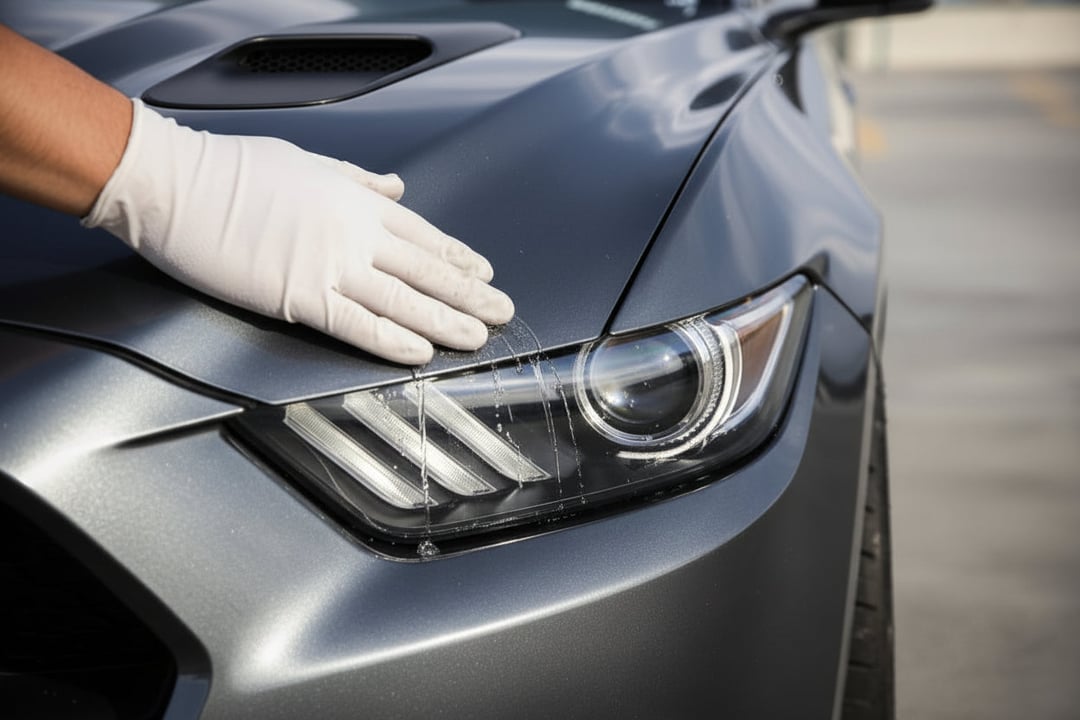
The front bumper is the most-photographed yet least-understood panel on a used car. Buyers walk around it, snap a quick picture, see no obvious crack, and move on. But to a trained inspector, the front bumper is a confession in plastic and paint, it tells you whether the car has been hit, how badly, and whether the repair was honest or hidden.
This guide walks you through exactly what we examine on every front bumper at InspectCar, in the order we examine it, and why each step matters when you are about to spend tens of thousands of dirhams on a vehicle in the UAE used market.
Why the Front Bumper Matters More Than You Think
Most low-speed collisions in the UAE happen at the front. Parking taps, rear-ended-the-car-in-front incidents, drive-throughs misjudged by a few centimetres, they all leave their fingerprint on the same component. The bumper itself is replaceable, and that is exactly the problem: it is so easy to replace that sellers do it pre-sale to mask deeper structural damage behind it.
What sits behind the bumper cover is what actually matters: the bumper reinforcement bar (a steel or aluminium beam), the energy absorber foam, the crash boxes, and the front rails of the unibody. A perfectly straight new bumper cover can hide a crumpled crash box or a kinked rail. The bumper itself is the surface, your job (or your inspector's) is to read what it says about everything behind it.
The Six Inspection Points We Run on Every Front Bumper
1. Panel Gap Alignment
A factory-fitted bumper sits within tight, even tolerances against four neighbouring panels: the bonnet (hood), both front fenders, and the headlamp housings. We measure the gap at six points around the bumper. If one side is 4 mm and the other is 7 mm, the bumper has either been removed and refitted poorly, or the underlying mounting brackets have been pushed back from impact.
Uneven gaps near the headlamp are the single most reliable visual signal of a previous front-end hit. Manufacturers do not ship cars from the factory with this kind of variation; it is always created later.
2. Paint Thickness Reading
We use a calibrated paint depth gauge (PDG) and take readings at multiple points across the bumper surface. Factory paint on a plastic bumper typically reads between 80 and 130 microns. Anything above 200 microns means the panel has been resprayed at least once. Above 300 microns suggests heavy filler or multiple respray attempts to mask a panel repair.
Critically, we compare the bumper readings to the readings on the adjacent fenders and bonnet. If the bumper reads 250 microns and the fenders read 110 microns, the bumper alone has been refinished, a strong indicator it was either replaced or repaired after impact.
3. Mounting Tabs and Clip Integrity
Behind the bumper, on the underside near the wheel arches, are plastic mounting tabs that clip into the fenders and the lower air dam. These tabs are the first thing to snap during a frontal collision. We physically inspect every accessible tab for cracks, fresh adhesive, zip-tie repairs, or replacement aftermarket clips.
Broken or glued tabs are a near-certain sign of a previous impact, even when the visible surface of the bumper looks pristine.
4. Underbody and Lower Lip Examination
The lower edge of the front bumper takes the brunt of speed bumps, kerbs, and ramp scrapes: common in Dubai, Sharjah, and Ajman parking buildings. Light wear here is normal on any used car. What we look for is asymmetric damage: heavy scuffing on one side only, fresh paint on the lower lip while the upper bumper is original, or a mismatched lower splitter.
We also probe the foam absorber behind the bumper. A compressed or torn foam absorber means an impact happened and the cover was simply replaced or pushed back into shape. The foam is supposed to deform once and be discarded; finding a previously deformed one is a major red flag.
5. Parking Sensor and Camera Function
Modern bumpers carry sensors, cameras, washer jets, ADAS radar modules, and LED light bars. Each sensor has a precise calibrated location. After a bumper replacement using non-OEM parts or careless reassembly, sensors are often refitted misaligned, missing entirely, or swapped for cheap aftermarket alternatives.
We test every parking sensor with the car running, listen for the correct beep pattern, verify the reverse camera projects within the dynamic guidelines, and confirm any radar-cruise icon on the dashboard does not throw a calibration warning. A misaligned forward radar in a vehicle with adaptive cruise is dangerous on UAE highways at highway speeds.
6. VIN and Build Sticker Cross-Check
Every original bumper component on a modern vehicle has a small moulded part number on its inside surface. We open the bonnet and inspect the part number on the upper bumper carrier and the underside of the cover where accessible. We then cross-reference these against the vehicle build data.
A bumper cover whose part number does not match the original specification (common when an SE-trim cover is fitted on a base-trim car after damage) is an instant disclosure failure on the seller's part, and a strong reason to renegotiate or walk away.
Common Hidden Defects We Find
In the UAE used market, the front bumper most often hides one of three patterns:
- Cosmetic respray over light kerb damage. The bumper cover was scuffed, sanded, filled, and resprayed. Mechanically the car is fine, but the seller did not disclose the work. Negotiation point: a notable sum to 2,000.
- Bumper replaced after light frontal hit. A new (often non-OEM) cover, possibly with new headlamp on one side. Crash boxes and rails are usually undamaged. Negotiation point: a notable sum to 6,000, plus a written disclosure.
- Bumper replaced over structural damage. The cover and reinforcement bar are new, but the crash box on one side is crumpled or the front rail shows kinks. This is the dangerous one: it can affect handling, airbag deployment, and resale value drastically. Walk away or demand a 25 to 35 percent price reduction backed by an independent body-shop quote.
What This Means for You as a Buyer
You do not need professional tools to do a basic front bumper check before booking a full inspection. Walk slowly around the front of the car. Crouch down to eye level with the gap between the bumper and the bonnet. Look at the gap at the left edge, the centre, and the right edge. They should be the same.
Now look at the gap between the bumper and each headlamp housing. Same exercise. If anything looks off, even by a couple of millimetres, assume the bumper has been off the car at some point in its life. That alone is not a reason to reject the car, but it is a reason to insist on a full pre-purchase inspection before transferring the registration.
Trust your eyes for the surface. Trust an experienced inspector with calibrated tools for everything underneath.
How InspectCar Documents Front Bumper Findings
Every front bumper observation in our digital report is rated against five conditions: Excellent (factory-original, all tolerances correct), Good (minor cosmetic wear consistent with age), Minor (one or two non-structural defects such as a small kerb scrape or a single mismatched gap), Major (resprayed, replaced, or evidence of a previous impact), and Others (anything that needs photo documentation but does not fit the prior categories).
You receive paint-thickness readings at every measurement point, photos of any anomalies, an annotation on a body diagram showing the exact location of any finding, and a written summary in plain English or Arabic. The report is shareable with the seller, and is often the document that closes a fair negotiation.
Book the Inspection Before You Pay the Deposit
The single most expensive mistake we see in the UAE used-car market is paying a deposit before an independent inspection. Once your money is sitting with the seller, your leverage to renegotiate over a hidden bumper repair drops to zero.
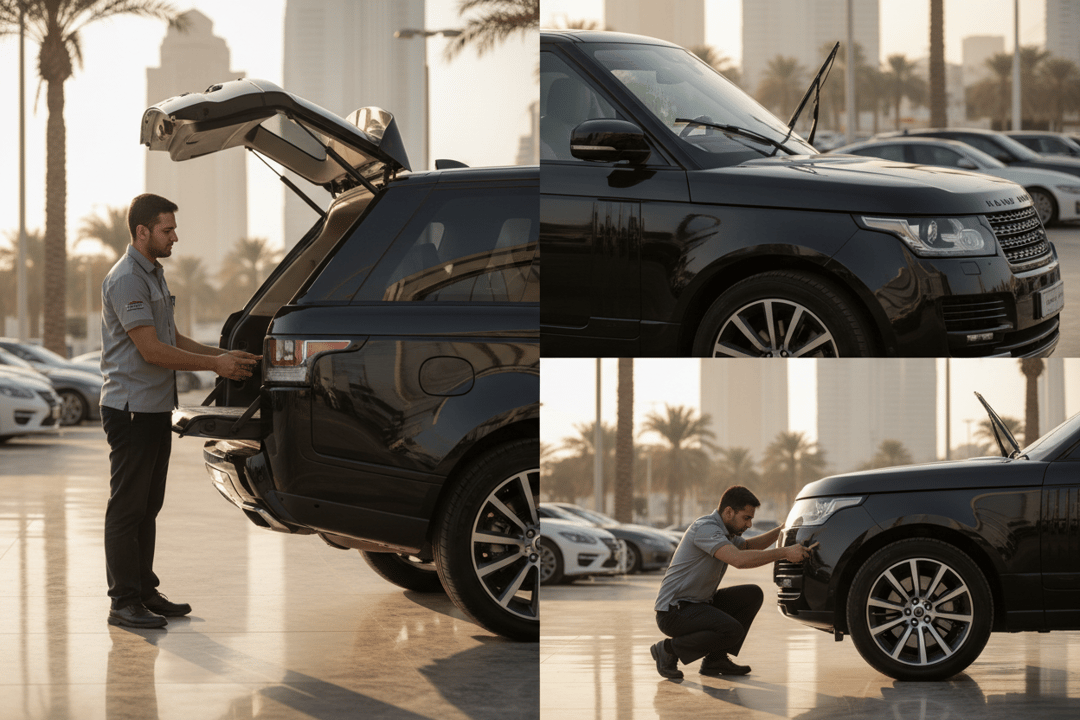
Our inspector comes to the vehicle anywhere in Dubai, Sharjah, Ajman, Ras Al Khaimah, or Umm Al Quwain. The full body and computer inspection, which includes everything described above plus 410+ additional checkpoints across the rest of the vehicle, typically takes 60 to 90 minutes on site, and the digital report arrives within 24 hours.




0 Comments
No comments yet. Be the first to share your thoughts!