

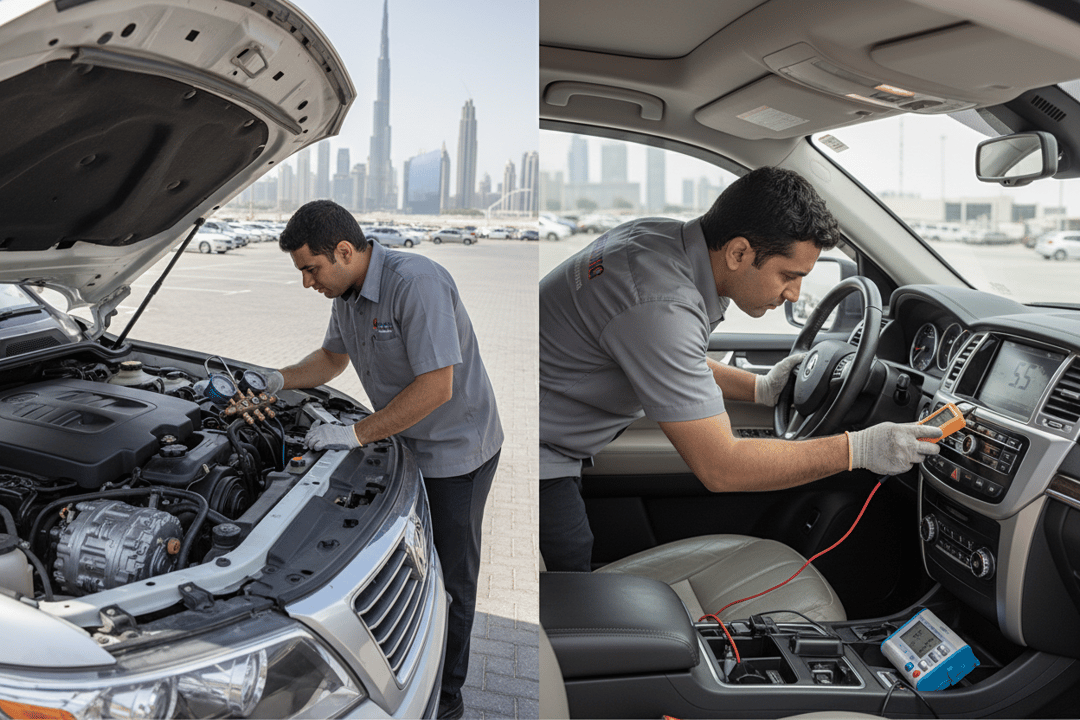
The HVAC system is the single most important comfort component on a UAE car. The cabin temperature outside in July reaches 50 degrees Celsius. A car parked for an hour in direct Dubai sun reaches 75 degrees Celsius inside. The air-conditioning system is asked to drop that temperature by 20 degrees within 5 minutes: every single trip, six months a year, for 5 to 10 years. Nothing else on the car works as hard, as often, in conditions as harsh.
This is the ninth category in our 25-category, 410-plus-checkpoint inspection. Eleven focused checks, each one of them a clear pass-or-fail signal about how well the most-used system on the car will survive the buyer's first UAE summer.
Why HVAC failures are the most expensive comfort repair you can inherit
Two facts shape every HVAC finding we record:
First, refrigerant: every UAE car runs the AC system harder than the manufacturer designed it for. The compressor cycles thousands of times a day in city traffic. Refrigerant leaks at every O-ring and every hose junction develop earlier than in milder climates. By year 5, most UAE cars have lost 20 to 30 percent of their refrigerant charge, and the buyer who just took delivery is the one who pays for the recharge.
Second, dust: the same fine sand that coats the outside of a car in Dubai or Sharjah is sucked into the cabin air filter and the evaporator core every time the AC runs. A blocked evaporator does not blow cold even with a healthy compressor. Cleaning the evaporator requires removing the dashboard: a 2,500 to 6,000 AED labour bill on most cars.
The 11 HVAC checkpoints below catch both stories, the leak story and the airflow story, before the deposit changes hands.
The 11 HVAC checkpoints
1. A/C Compressor
Four states: Working, Noisy, Not Engaging, Not Working. With the engine running and the AC switched on at maximum cooling, we open the bonnet and watch the compressor clutch. It should engage within 3 seconds, run smoothly, and disengage when the AC is switched off. We listen for: cycling that is too rapid (every 5 to 10 seconds, a sign of low refrigerant), grinding from the compressor itself (worn internal bearings), or no engagement at all (failed clutch coil or BCM signal).
- Noisy: compressor internal wear. Replacement is rarely a stand-alone job, when one component fails, the entire AC system must be flushed because metal debris contaminates the lines. 3,500 to 12,000 AED for compressor + flush + recharge.
- Not engaging: diagnose the cause. Could be a 200-AED clutch relay, or a 5,000-AED compressor.
2. A/C Blows Cold
Four states: Very Cold, Cool, Warm, Not Working. We run the AC on maximum, recirculation on, fan at full, and measure the temperature at the dashboard centre vent with a calibrated digital thermometer. After 5 minutes of running, the vent temperature should be between 4 and 8 degrees Celsius below ambient on a healthy system. If we measure 6 to 10 degrees below ambient, the system is acceptable. Anything warmer than 12 degrees below ambient at idle indicates a serious refrigerant or compressor issue.
We also check the cooling difference between idle and 1,500 rpm, a healthy system cools more at idle (because air moves slower over the evaporator). A system that cools only at speed often has a worn compressor or a partially blocked condenser.
3. Heating System
Three states: Working, Weak, Not Working. UAE buyers rarely test heating, but a non-functional heater indicates a clogged heater core, a stuck thermostat, or a leaking heater hose under the dashboard. The heater core leak is particularly important, it is the single most common cause of "musty smell" findings and water on the front passenger carpet. Cross-reference with the interior-inspection findings.
4. Blower Motor
Four states: All Speeds Working, Some Speeds, Noisy, Not Working. We test every blower speed setting from 1 to maximum. A blower with only the highest speed working is a classic blower-motor-resistor failure (200 to 600 AED on most Japanese and Korean cars; 1,200 to 3,500 AED on some German cars where the resistor is integrated into the motor module).
- Squealing or scratching from the dashboard at low speeds: a leaf or a coin has fallen into the blower wheel through the cabin air intake. 200 to 400 AED labour to remove and clean.
- Loud whirring at high speed: blower motor bearings are worn. Replacement: 800 to 2,500 AED.
5. Front Defroster
Three states: Working, Weak, Not Working. We activate the windshield defrost mode and verify that air actually directs upward to the windshield with full pressure. Most defroster failures in the UAE are not heating-related, they are blend-door failures preventing the system from routing air to the windshield vents. Cross-reference with checkpoint 10 (blend-door actuators) below.
6. Rear Defroster
Three states: Working, Not Working, N/A. We activate the rear-defroster button and watch the heating grid lines on the rear glass start to warm. Within 90 seconds, condensation or moisture in the cabin should clear from the rear window. A non-working rear defroster is almost always a broken grid line, visible as a small gap in one of the horizontal red traces on the inside of the glass. Repair kits exist (50 to 150 AED), but on aftermarket replacement glass the heating grid is often missing entirely. Cross-reference with the glass inspection.
7. Climate Control Display
Three states: Working, Partial, Not Working. The display panel where temperature, fan speed, and zone selection are shown. Dead pixels, dim segments, or sections that fail to illuminate indicate a failing control panel or backlight LED. On most modern cars the climate panel is integrated with the infotainment display, failures here often reflect head-unit issues. Cross-reference with the digital and infotainment findings.
8. Dual Zone Climate
Three states: Working, Not Working, N/A. We set the driver side to 18 degrees Celsius and the passenger side to 28 degrees Celsius and check that the vent temperatures actually differ between the two sides. A dual-zone system that delivers the same temperature to both sides indicates a stuck or failed blend-door actuator on one side. Repair: 500 to 2,800 AED depending on which side has failed and how deep into the dashboard the actuator sits.
9. Rear A/C
Three states: Working, Not Working, N/A. SUVs and 7-seaters with rear AC controls. We activate the rear AC, set it to maximum cooling, and verify cold air is actually exiting from the rear ceiling or rear pillar vents. A non-working rear AC is often a blocked evaporator coil at the rear unit, or a failed rear blower motor. 1,200 to 4,500 AED depending on the model.
For families with children, this is a dealmaker-or-breaker checkpoint in UAE summer. A non-cooling rear cabin in a 7-seat SUV with a 50-degree exterior temperature is unusable.
10. Blend Door Actuators
Four states: Working, Clicking Noise, Stuck, Not Working. The most under-reported HVAC failure in the UAE market. Blend-door actuators are small electric motors behind the dashboard that route air between vents (face, feet, defrost) and adjust temperature mixing. They fail two ways: clicking (a worn plastic gear strips one tooth at a time, audible as a soft tick when temperature is changed) or stuck (full air-flow only goes to one set of vents regardless of selection).
- Clicking noise: early stage. Replace the actuator before the gear strips fully. 350 to 900 AED for the part. Labour can be anywhere from 30 minutes (easily-accessed actuators) to 4 hours (deep-dashboard actuators requiring full dash removal).
- Stuck on cold-only or hot-only: the temperature blend door is jammed. Until it is fixed, the heater or AC cannot regulate cabin temperature.
- Stuck on defrost-only or face-only: the mode-direction door is jammed. The system still cools, but airflow always exits the same vents.
11. HVAC Hoses & Connections
Three states: Good, Worn, Leaking. We open the bonnet and inspect the AC lines visible at the front of the engine bay: the high-pressure line (thinner, hotter), the low-pressure line (thicker, colder during operation), and any visible O-ring junctions. Oily residue on a hose junction is refrigerant oil leaking with the gas. We also check the condenser at the front of the radiator stack, the thin aluminium fins should be straight and clean. Bent or damaged fins from kerb impacts or stones reduce cooling efficiency by 10 to 30 percent.
Patterns that tell the real story of the HVAC system
Three or more HVAC findings together rarely happen by chance:
- Compressor cycling rapidly + low cooling at idle + oily condenser: the system is low on refrigerant from a leak. The recharge will not last more than 6 months without finding and fixing the leak first. Total repair: 1,500 to 4,500 AED.
- Clicking blend-door + dual-zone temperatures equal + cabin musty smell: water has entered the HVAC unit through a clogged drain, the actuator gears have absorbed moisture, and the evaporator is now growing mould. The full repair is a dashboard-out service. 5,000 to 12,000 AED.
- Front defroster weak + rear defroster dead + rear AC not cooling: the rear HVAC harness has corroded ground points, strong signal of prior trunk-floor water damage. Cross-reference with the frame inspection trunk-floor findings.
- Blower works only on max speed: standard resistor failure, almost always combined with neglected cabin filter. Cross-reference with the interior inspection cabin-filter findings.
How we actually test the AC system in 7 minutes
Our inspectors carry:
- A digital thermometer probe with a thin tip that fits inside the centre dashboard vent.
- An ambient temperature reference, we record the outside air temperature first.
- An OBD scanner to read climate-control fault codes, most modern cars log every blend-door position error and every refrigerant-pressure-sensor reading, even when the dashboard does not display a warning.
- A UV inspection light for refrigerant leaks. Refrigerant oil contains a UV dye that glows under blacklight at any leak point, even tiny ones at O-ring junctions.
The full HVAC test takes 7 to 10 minutes if the engine is already warm, longer if we need to wait for ambient temperature stabilisation in extreme heat.
What each HVAC finding costs you
Rough negotiation guidance for the UAE used-car market:
- Refrigerant leak with healthy compressor: 800 to 2,500 AED to find, repair, and recharge.
- Failed compressor with full system flush and recharge: 3,500 to 12,000 AED. Major negotiation point.
- Heater core leak (water in passenger footwell): 2,800 to 6,500 a notable sum requires dashboard removal.
- Blower-motor resistor failed: 200 to 600 AED on most Asian cars; 1,200 to 3,500 AED on premium German cars.
- Blower motor bearings noisy: 800 to 2,500 AED.
- Single blend-door actuator clicking or stuck: 500 to 2,800 AED depending on dashboard depth.
- Multiple blend-door actuators failing simultaneously: 4,000 to 12,000 a notable sum recommend full HVAC service.
- Rear AC not cooling: 1,200 to 4,500 AED.
- Damaged condenser fins: 1,500 to 5,000 AED for replacement.
- Climate-control panel display dead: 1,800 to 8,000 AED depending on whether it is integrated with infotainment.
What the InspectCar HVAC report shows you
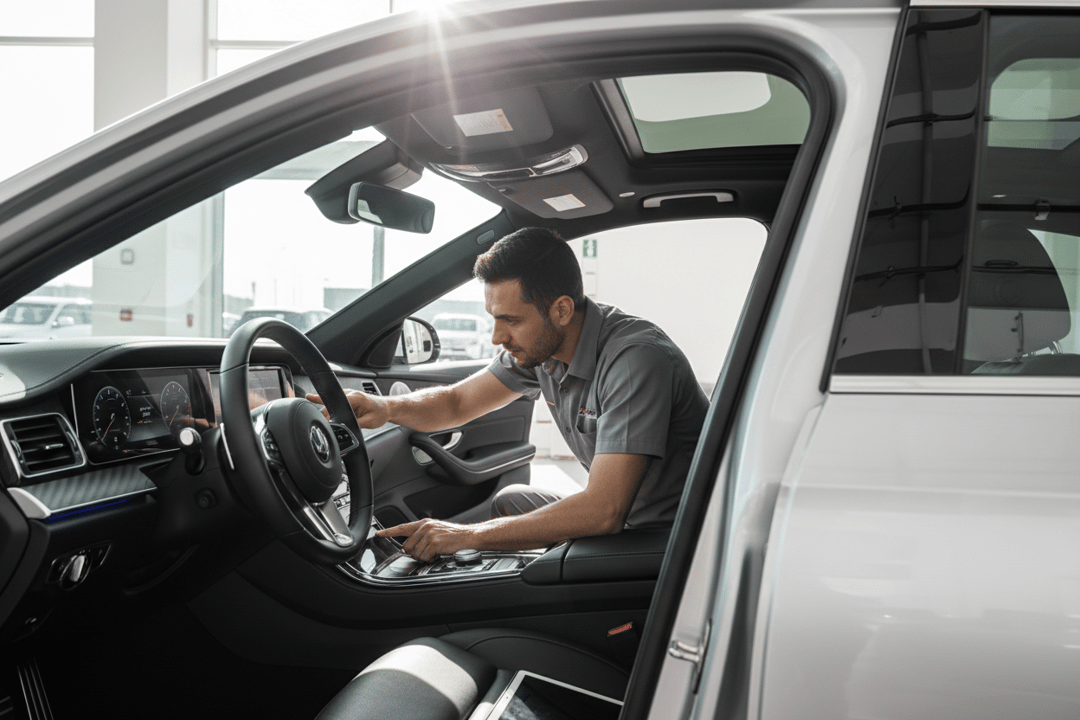
Every one of the 11 HVAC checkpoints is rated on the same five-tier scale used across the rest of the inspection: Excellent, Good, Minor, Major, or Other. We record the exact vent temperature in Celsius and the ambient temperature at the time of test. Photographs document any visible refrigerant leak, bent condenser fin, or damaged hose. Stored fault codes from the climate-control module are listed in the report.
The report is delivered as a shareable digital link, valid for 90 days. Forward it to the seller during negotiation, save it for warranty documentation, or share it with an AC specialist for an independent quote.
Book the inspection before the deposit
HVAC issues hide better than almost any other defect on a used car: the AC blows visibly cold during a 10-minute test drive, the dashboard display shows the right numbers, the buttons all click. The problems show up on day five of ownership, in mid-July, when the family is loaded into the car for a Friday trip and the rear AC vents blow lukewarm. By that point the deposit is paid.
Our inspector arrives at the car wherever it is: Dubizzle listing, dealer lot, seller home: across Dubai, Sharjah, Ajman, Ras Al Khaimah, and Umm Al Quwain. HVAC is included in the Body & Computer Inspection and the full Comprehensive 410-plus-checkpoint inspection. Two to three hours on site. Digital report within 24 hours.
Bring this 11-point list to your next viewing. Ask the seller to start the car and run the AC for 5 minutes before you arrive: then test every fan speed, every mode, both temperature zones, and the rear vents. The honest seller will let you do all of that. The others will offer to "show you on the test drive", which is the answer that tells you everything.




0 Comments
No comments yet. Be the first to share your thoughts!