


The frame is the only part of a car you cannot really repair: only weld, straighten, or hide. Every other component on a vehicle has a replacement part number; the structural shell does not. When a chassis member is bent, a strut tower is pushed back, or a rear floor pan is welded over an old crumple, the car never drives the same way again, never crashes the same way again, and never holds its value the same way again.
This is why frame and chassis condition is the second category in our 25-category inspection, right after engine start. Twenty-seven points, every one of them under the car or under the carpet, every one of them invisible to a buyer who only walks around the outside.
Why frame damage is the deal-breaker most buyers miss
UAE used-car listings rarely disclose frame work. Even Carfax-style histories often skip body-shop welding because the work is paid in cash and never reported. The seller knows. The body shop knows. The buyer almost never does, until the day a second inspector lifts the car on a hoist and the welds, the seam-sealer mismatches, and the corrosion patches all surface at once.
An ex-accident car with structural repair loses 25 to 40 percent of its market value. If you buy without knowing, you carry that loss. If you find out before paying the deposit, you negotiate it back into the price, or you walk to the next listing.
The 27 frame condition checkpoints
Front-end structural members
The front of the car absorbs almost every collision impact. We check seven structural elements here.
- Bumper Support: the steel or aluminium reinforcement bar behind the plastic cover. Bent, replaced, or welded support means a front impact occurred. Five states: No Visible Fault, Minor Damage, Repaired, Replaced, Damaged.
- Bulk Head: the panel separating the engine bay from the cabin. Damage here travels through to the steering column. Minor wrinkles in the firewall sheet metal are forensic evidence of a moderate front-end hit.
- Radiator Frame: often called the radiator support or core support. A bent radiator frame is the cheapest way for a body shop to "fix" a front impact: they straighten the support, replace the radiator, and the bumper looks fine externally.
- Cross Member: the lateral beam connecting the front frame rails. Cracks or welds here affect engine cradle alignment, which then ruins tyre wear within months.
- Left Front Chassis Extension & Right Front Chassis Extension: the two long boxed-section rails that absorb crash energy. Five states: No Visible Fault, Minor Damage, Frame Repaired, Minor Frame Repaired, Damaged. Welded extensions almost never restore full crash performance.
- Left Front Apron & Right Front Apron: the inner fender panels. We look for: No Damage, Minor Dent, Repaired, Welded, Replaced, Rusted, Bent. Aprons are unibody-critical, pushed-back aprons mean the airbag sensors will not trigger correctly in a future crash.
Passenger-cell pillars (the safety cage)
The pillars are what keeps the roof off you in a rollover. We rate every pillar in seven states: No Damage, Minor Dent, Repaired, Welded, Replaced, Bent.
- Left A-Pillar & Right A-Pillar: the front roof support next to the windshield. A bent A-pillar usually means a serious front-end or rollover event. Replacement A-pillars are factory-only on most modern cars and require dealer-grade welding equipment.
- Left B-Pillar & Right B-Pillar: the centre pillar where the seat belt anchors. B-pillar damage compromises side-impact protection and seat-belt geometry simultaneously.
- Left C-Pillar & Right C-Pillar: the rear roof support. C-pillar welds in a sedan or SUV almost always mean rear-collision repair.
- Firewall: the wall between cabin and engine bay. Wrinkles indicate a hit hard enough to deform the engine compartment back toward the driver's feet.
Floor and rocker structure
- Floor Pan: the cabin floor. Four states: No Visible Fault, Rusted, Repaired, Damaged. Lift the carpet: fresh seam sealer, mismatched paint, or rust under-treatment all signal floor work after water damage or a heavy collision.
- Left Rocker Panel & Right Rocker Panel: the structural rails along the bottom of the doors. Seven states: No Damage, Minor Dent, Repaired, Welded, Replaced, Rusted, Bent. Rockers carry the entire side-impact load, never accept a car with welded rockers without a 25 to 35 percent price reduction.
- Roof Rail: the side rail running from A-pillar to C-pillar over the top. Bent or welded means rollover.
Rear-end structure
- Left Rear Chassis Extension & Right Rear Chassis Extension: the rear equivalents of the front rails. Damage here is almost always rear-end impact. Welded rear extensions also affect tow-rating safety.
- Rear Bumper Support: the steel beam behind the rear cover. Same five states as the front. Easier to hide than front damage because nobody walks behind a car the way they walk in front.
- Rear Panel: the lower rear closing panel. Wrinkles or welds here mean a rear-end collision absorbed at the trunk floor.
- Trunk Floor: the floor of the boot. Six states: No Damage, Repaired, Welded, Replaced, Rusted, Wet/Water Damage. Lift the spare-tyre cover, fresh sealer or mismatched bolts give it away every time. Wet/water damage is critical: it means the trunk floor leaks and the chassis members underneath are rusting from the inside.
Full chassis & protection
- Chassis: the overall frame condition (relevant on body-on-frame vehicles like trucks and large SUVs). Five states matching the chassis-extension scale.
- Under Body Shields & Covers: the plastic and metal panels protecting the underside. Four states: No Visible Fault, Missing, Damaged, Repaired. Missing shields tell you the car has been off-road or has had under-body work done, and the work was reassembled badly.
Frame condition comments
The 27th item is a free-text field where the inspector writes anything that did not fit a fixed state: for example, evidence of a frame-machine pull, paint mismatches between original and reworked sections, or salvage-title indicators stamped on the inside of the door jamb. This is where context lives.
How we actually check the frame without a hoist on site
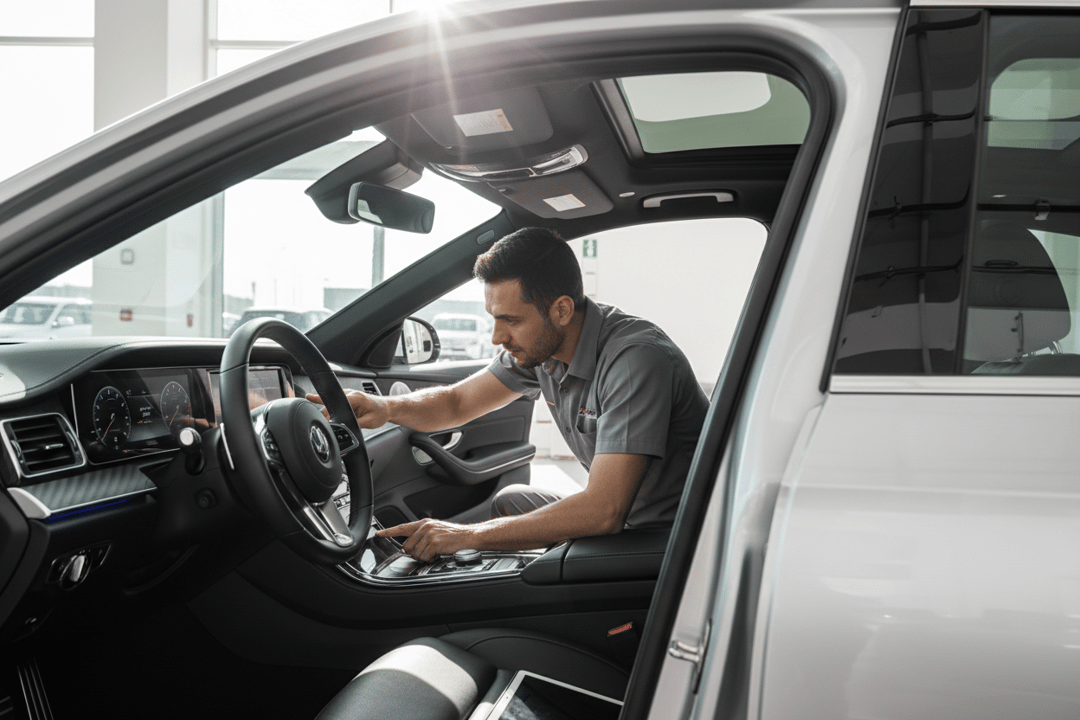
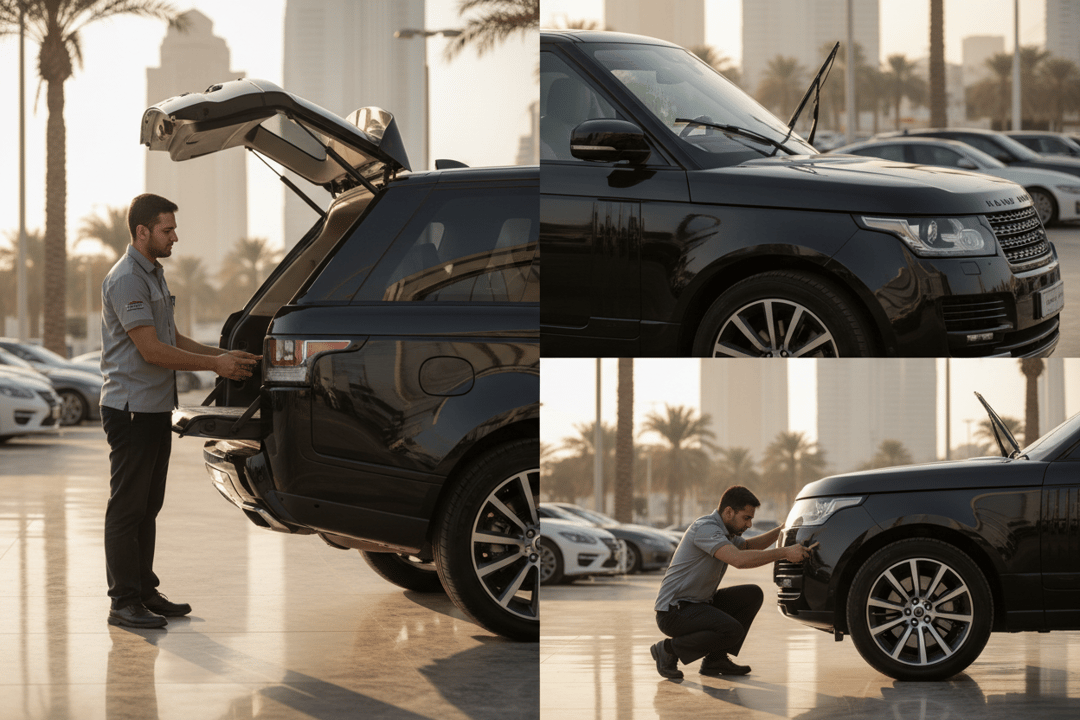
Most of our inspections happen at the seller's location, a Dubizzle listing in Mirdif, a dealer lot in Sharjah, a residential parking spot in Ras Al Khaimah. We do not always have a lift. So our inspectors carry:
- A digital paint-thickness gauge to spot panels that have been refinished.
- A magnetic seam tester to detect filler over a previously crashed area (filler does not attract a magnet).
- Inspection mirrors and a powerful LED flashlight for under-body work without a lift.
- An OBD scanner that pulls airbag-system event data, a deployed airbag in history is logged in the SRS module and never fully erased.
For premium or high-value vehicles, we strongly recommend booking a workshop visit as a follow-up so the car can be lifted. The on-site inspection catches 90 percent of frame issues; a hoist confirms the remaining 10 percent and locates the exact welds.
What each frame finding costs you
Rough negotiation guidance for the UAE used-car market:
- Minor Damage on a non-structural element (e.g. a dented under-body shield): 300 to 1,000 AED reduction.
- Repaired or welded apron with no impact on aprons or rails: 2,000 to 5,000 AED. Disclose-or-walk decision.
- Frame Repaired on a chassis extension: 8,000 to 20,000 AED reduction, plus a written declaration. Many buyers walk at this point.
- Welded B-pillar or C-pillar: walk away. The car has been in a serious collision, the safety cage cannot be restored to factory tolerance, and resale will be capped permanently at 50 to 60 percent of book value.
- Wet/water damage on trunk or floor pan: walk away. Hidden corrosion will rot the chassis from the inside within 18 to 36 months in UAE coastal humidity.
What the InspectCar frame report shows you
Every one of the 27 checkpoints is rated on the same five-tier scale used across the rest of the inspection: Excellent, Good, Minor, Major, or Other. Photographs document any Minor finding and every Major finding. A body-panel diagram on the report highlights exactly where any structural welds, repairs, or damage were found, so you can show the diagram to a body shop later for an independent quote.
The report is shared with you as a digital link, you can forward it to the seller during negotiation, save it as a PDF for your records, or share it with a third-party mechanic.
Book the frame inspection before you pay the deposit
Frame damage is the only finding category where we routinely tell buyers to walk away. Engine repairs are quotable, body-paint cosmetics are negotiable, but a structural repair on a unibody car never returns it to original safety performance, and the resale market knows.
The Body & Computer Inspection covers the front, rear, and side panels plus a full OBD scan. The full Comprehensive Inspection adds the under-body, the pillars, the floor pan, the trunk floor, and the chassis members described above, all 27 frame checkpoints, plus the other 23 categories. Inspector arrives at the car wherever it is across Dubai, Sharjah, Ajman, Ras Al Khaimah and Umm Al Quwain. Two to three hours on site. Digital report within 24 hours.
The cheapest car in the market is rarely the cheapest car to own. A 299 AED inspection has saved buyers 30,000 AED and more on hidden frame work, every week.



0 Comments
No comments yet. Be the first to share your thoughts!